Korean Gochujang Meatballs Recipe
If you’re craving something that packs a punch of flavor but also has that comforting, cozy vibe, I’ve got just the thing for you. This Korean Gochujang Meatballs Recipe is one of my absolute favorites to whip up when I want a crowd-pleaser that’s a little different from the usual. The balance between the spicy, sweet, and tangy glaze with juicy, tender meatballs is downright addictive. Trust me, once you try this recipe, you’ll keep coming back for more!
Why This Recipe Works
- Bold Flavors: The gochujang chili paste gives the meatballs a distinct sweet heat that wakes up your taste buds.
- Juicy Texture: The panko breadcrumbs and egg keep the meatballs tender, never dry or tough.
- Perfect Glaze: The apricot preserves and soy sauce glaze adds a sticky, tangy-sweet finish that’s irresistible.
- Simple Process: Browning on the stove before baking locks in flavor and ensures even cooking.

Ingredients & Why They Work
Every ingredient in this Korean Gochujang Meatballs Recipe plays a special part in building layers of flavor and texture. I always suggest picking fresh produce and good-quality ground beef to get the best results. Plus, the gochujang paste is a game-changer here—it’s worth grabbing an authentic jar for this recipe.
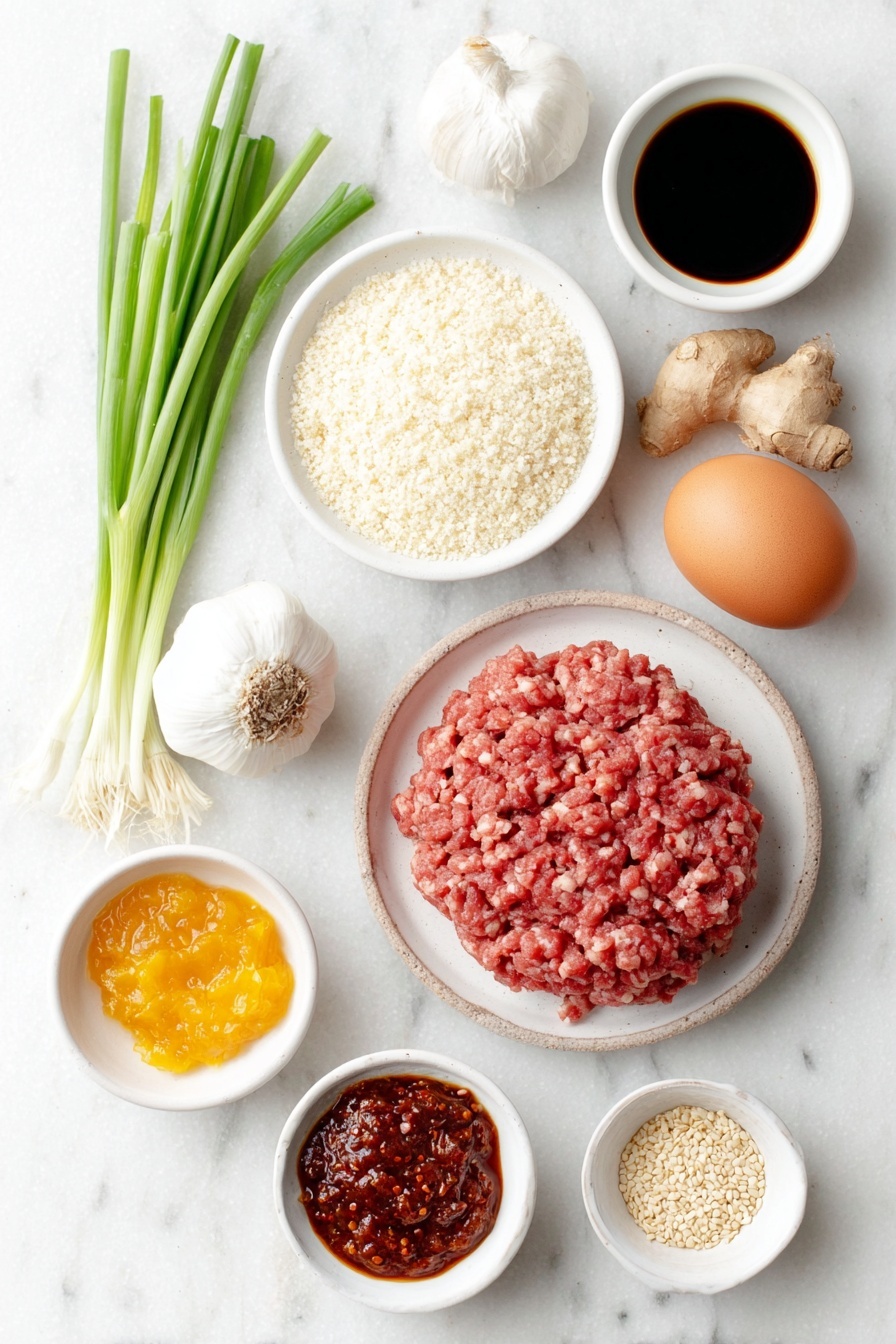
- Green Onions: Adds a fresh, mild bite that brightens up the meatballs.
- Garlic Cloves: Provides a warm, aromatic base that everyone loves.
- Egg: Binds the meatballs together so they stay tender and don’t fall apart.
- Panko Breadcrumbs: Keeps the meatballs light and fluffy compared to regular breadcrumbs.
- Gochujang Korean Chili Paste: The heart of the dish with its spicy, sweet, and fermented flavors.
- Fresh Ginger: Adds subtle zest and warmth that complements the chili paste beautifully.
- Kosher Salt & White Pepper: Season perfectly without overpowering the other ingredients.
- Ground Beef: Rich and juicy—feel free to use 80/20 for the best texture and flavor.
- Canola Oil: For pan-frying, it has a high smoke point and neutral flavor.
- Apricot Preserves: Gives the glaze that sweet punch balancing the spicy gochujang.
- Rice Vinegar: Adds acidity to cut through the richness with a slight tang.
- Soy Sauce: Brings umami depth and salty balance to the glaze.
- Toasted Sesame Seeds & Sliced Green Onion: Garnishes that add crunch and extra freshness.
Make It Your Way
What I love about this Korean Gochujang Meatballs Recipe is how easy it is to tweak to your taste. Feel free to play around with the spice level or add extra aromatics if you want. I’ve tried adding chopped mushrooms to stretch the meat and bring a bit of earthiness too.
- Variation: For a lighter twist, swap half the ground beef with ground turkey or chicken—it still holds the flavor beautifully.
- Spice level: If you’re not into heat, reduce the gochujang by half and add a teaspoon of honey for balance.
- Gluten-free: Use gluten-free panko or crushed rice crackers and tamari instead of soy sauce.
- Extra veggies: Finely shredded carrots or zucchini can sneak in some healthy moisture and color.
Step-by-Step: How I Make Korean Gochujang Meatballs Recipe
Step 1: Get Your Meatball Mixture Ready
Start by preheating your oven to 350°F. In a large bowl, mix the sliced green onions, minced garlic, egg, panko breadcrumbs, gochujang, fresh ginger, kosher salt, and white pepper. Then add the ground beef. The trick here is to mix everything gently—either with your hands or a spoon—until just combined. Overmixing can make the meatballs tough, so resist the urge to overhandle!
Step 2: Shape and Brown Your Meatballs
Form the mixture into golf ball-sized meatballs—don’t make them too small or they’ll dry out. Heat canola oil in a large skillet over medium-high heat, then brown the meatballs in batches, turning occasionally for about 3 to 4 minutes until they have a golden crust on all sides. This step adds flavor and locks in the juices.
Step 3: Finish Cooking in the Oven
Once browned, transfer the meatballs to a rimmed baking pan and pop them in the oven to bake for 10 minutes. This ensures they cook through evenly without drying out. Use a meat thermometer if you want to be precise—the internal temperature should reach 160°F.
Step 4: Whip Up the Sweet and Spicy Glaze
While the meatballs bake, whisk together apricot preserves, gochujang, rice vinegar, and soy sauce in a small pot. Cook over medium heat, stirring frequently, for about 5 minutes until the glaze slightly thickens. This sticky, vibrant glaze is what makes these meatballs so unforgettable.
Step 5: Glaze and Garnish
When the meatballs are done, brush them generously with the gochujang-apricot glaze. Sprinkle sliced green onions and toasted sesame seeds on top for a burst of crunch and freshness. Serve immediately and get ready for the compliments!
Tips from My Kitchen
- Don’t Overmix: Gently mix ingredients to keep your meatballs tender, not dense.
- Brown First: Browning in the pan before baking seals in juices and adds flavor.
- Glaze Glamor: Brush the glaze while meatballs are still warm for it to stick beautifully.
- Use a Thermometer: Avoid guessing—160°F ensures safe, perfectly cooked meatballs every time.
How to Serve Korean Gochujang Meatballs Recipe
Garnishes
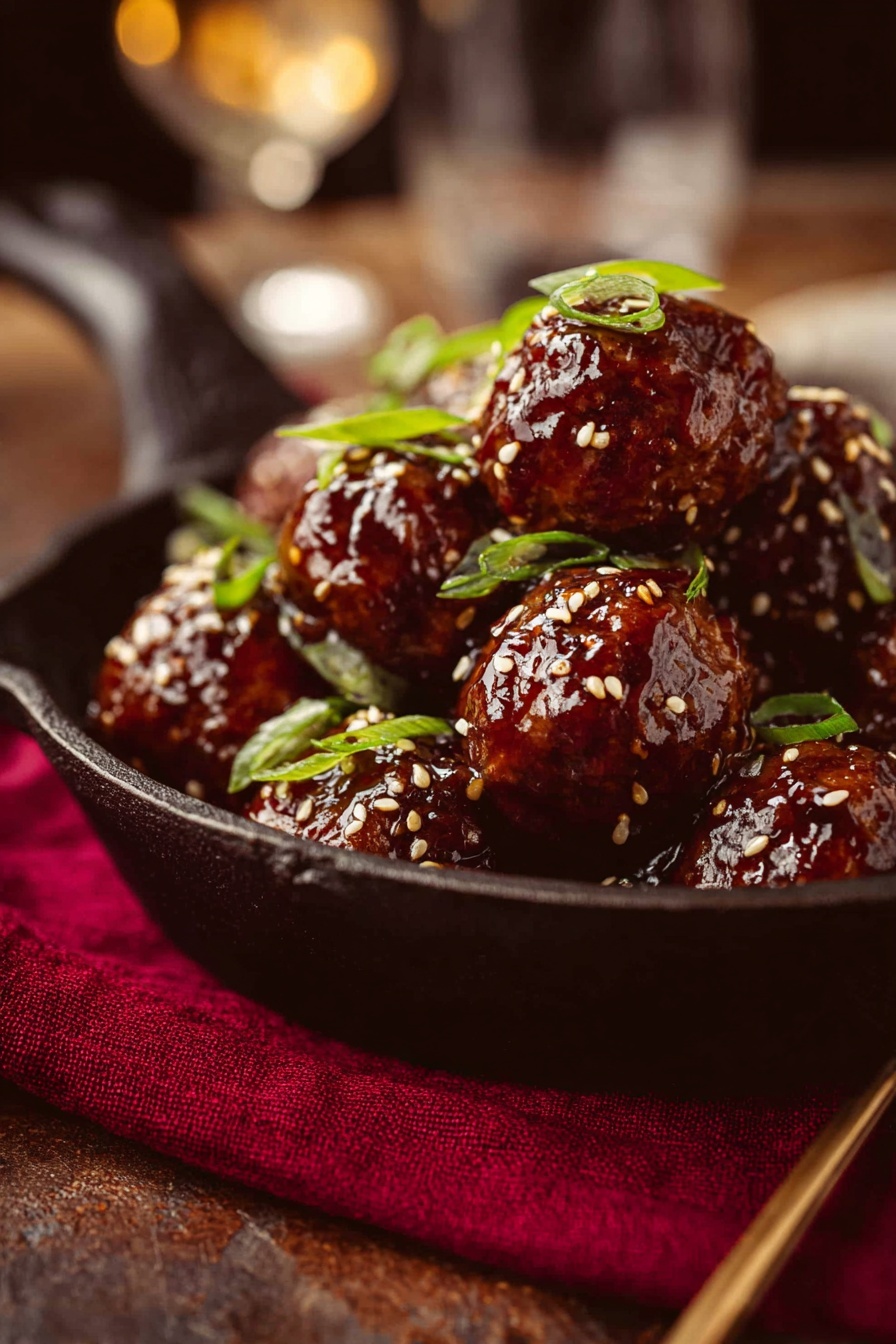
I love topping these meatballs with thinly sliced green onions and a sprinkle of toasted sesame seeds—it adds color, texture, and a fresh bite that balances the spiciness perfectly. Sometimes I toss on a few chopped cilantro leaves for an herby finish when I want to get fancy.
Side Dishes
For sides, I usually serve these Korean Gochujang Meatballs with fluffy steamed rice or sticky jasmine rice. If you want to add veggies, quick sautéed bok choy or a crunchy cucumber salad with sesame oil dressing complements the flavors beautifully.
Creative Ways to Present
For special dinners or parties, I like to serve these meatballs on bamboo skewers, drizzled with extra glaze and garnished with sesame seeds. They make great appetizers and look super festive when garnished with edible flowers or microgreens.
Make Ahead and Storage
Storing Leftovers
After lunch or dinner, I let leftovers cool to room temperature and store them in an airtight container in the fridge. They keep well for up to 3 days — perfect for quick meals later in the week!
Freezing
If you want to make these in advance, freeze the browned but unbaked meatballs on a sheet tray until firm, then transfer to a freezer bag. You can freeze the glaze separately too. This way, they last up to 3 months and you can bake them fresh straight from frozen.
Reheating
I usually reheat leftover meatballs in a 350°F oven for about 10-12 minutes to keep them juicy and avoid sogginess. You can also warm them gently in a skillet with a splash of water or broth and toss with more glaze before serving.
FAQs
-
Can I use a different meat instead of ground beef for Korean Gochujang Meatballs Recipe?
Absolutely! Ground pork, turkey, or chicken all work well. Just keep in mind that pork will be a bit fattier and juicier, while turkey and chicken are leaner, so adding a little extra moisture like grated vegetables or an extra egg can help maintain tenderness.
-
What is gochujang and can I substitute it?
Gochujang is a Korean fermented chili paste known for its spicy, sweet, and umami flavors. If you cannot find it, you can mix a bit of miso paste with chili flakes and honey as a substitute, but the flavor won’t be quite the same. Gochujang adds a unique depth that’s hard to replicate.
-
How spicy are these meatballs?
These meatballs have a noticeable but balanced heat, thanks to the gochujang, which is more spicy-sweet than fiery hot. If you prefer milder flavors, reduce the amount of gochujang and increase the apricot preserves slightly for sweetness.
-
Can I bake the meatballs without pan-frying?
You can skip the pan-frying and bake meatballs directly, but you’ll miss out on the delicious caramelized crust that adds great flavor and texture. If time is tight, bake at a higher temperature (375°F) for 15-18 minutes but expect a different texture.
Final Thoughts
This Korean Gochujang Meatballs Recipe holds a special place in my kitchen because it’s both comforting and exciting at the same time—perfect for sharing with friends or family. The combination of flavors, ease of preparation, and versatility means you’ll want to keep it in your weekly rotation. Give it a try—I promise it’ll be one of those recipes you can’t wait to make again!
Print
Korean Gochujang Meatballs Recipe
- Prep Time: 25 minutes
- Cook Time: 30 minutes
- Total Time: 55 minutes
- Yield: 4 servings
- Category: Appetizer
- Method: Frying
- Cuisine: Korean
Description
Delicious Korean Style Meatballs feature tender ground beef mixed with aromatic ginger, garlic, and spicy gochujang, pan-fried to a golden brown and finished in the oven. These meatballs are glazed with a sweet and tangy apricot and gochujang sauce, then garnished with fresh green onions and toasted sesame seeds for a perfect appetizer or main course offering a flavorful Korean-inspired bite.
Ingredients
Meatballs
- 3 green onions very thinly sliced
- 2 garlic cloves minced
- 1 egg lightly beaten
- ½ cup panko breadcrumbs
- 2 tablespoons gochujang Korean chili paste
- 1 tablespoon minced fresh ginger
- 1 teaspoon kosher salt
- ½ teaspoon ground white pepper
- 1 pound ground beef
- 2 tablespoons canola oil for pan-frying
Glaze
- ⅓ cup apricot preserves
- 2 tablespoons gochujang Korean chili paste
- 1 ½ tablespoons rice vinegar
- 1 tablespoon soy sauce
Garnish
- Sliced green onion
- Toasted sesame seeds
Instructions
- Make the Meatballs: Preheat oven to 350 degrees F. In a large bowl, stir together green onions, garlic, egg, panko breadcrumbs, gochujang, fresh ginger, kosher salt, and ground white pepper until well combined. Add ground beef and mix gently with hands or spoon until just combined; avoid overmixing to keep meatballs tender. Form mixture into golf ball-sized meatballs using your hands or a scoop.
- Pan-Fry the Meatballs: Heat canola oil in a large skillet over medium-high heat. In batches, carefully add meatballs to the skillet and cook for 3 to 4 minutes, turning occasionally, until browned evenly on all sides.
- Bake the Meatballs: Transfer browned meatballs to a rimmed baking pan and place in the preheated oven. Bake for 10 minutes or until the internal temperature reaches 160 degrees F, ensuring they are cooked through.
- Prepare the Glaze: While the meatballs bake, whisk together apricot preserves, gochujang, rice vinegar, and soy sauce in a small saucepan. Cook over medium heat for 5 minutes, stirring frequently, until the glaze thickens slightly.
- Glaze and Garnish: Remove meatballs from oven and brush generously with the prepared glaze. Sprinkle with sliced green onions and toasted sesame seeds before serving.
Notes
- For a spicier kick, increase the amount of gochujang in the meatballs or glaze.
- If panko breadcrumbs are unavailable, regular breadcrumbs can be used but may affect the texture slightly.
- To ensure meatballs stay moist, do not overmix the meat mixture.
- Use a meat thermometer to verify internal temperature is 160 degrees F for safe consumption.
- These meatballs can be served as an appetizer or alongside steamed rice and vegetables as a main course.
Nutrition
- Serving Size: 1 serving
- Calories: 320 kcal
- Sugar: 8 g
- Sodium: 650 mg
- Fat: 18 g
- Saturated Fat: 6 g
- Unsaturated Fat: 10 g
- Trans Fat: 0.2 g
- Carbohydrates: 16 g
- Fiber: 1 g
- Protein: 22 g
- Cholesterol: 85 mg