Korean Beef Sesame Noodles in 20 Minutes Recipe
If you’re craving a meal that’s flavorful, comforting, and ready faster than you can decide what to watch next on Netflix, then you’re going to love this Korean Beef Sesame Noodles in 20 Minutes Recipe. It’s quickly become one of my go-to dinners for busy weeknights — think tender, savory slices of beef mingling with chewy noodles and a sauce that’s got just the right kick of sweet, salty, and spicy. Stick with me, and I’ll walk you through how to nail this recipe every time, plus some fun tweaks to make it your own!
Why This Recipe Works
- Speedy Prep: Using brown rice noodles and a simple sauce you can whisk together fast means dinner’s on the table in 20 minutes tops.
- Balanced Flavors: The blend of tamari, honey, and gochujang hits sweet, salty, and spicy notes that excite your taste buds without overpowering.
- Versatile Ingredients: You can swap the beef for chicken or even tofu, and toss in any veggies you have handy—this recipe is made for flexibility.
- Simple Technique: A quick sear and stir-fry means you don’t have to be a pro to make restaurant-quality noodles at home.

Ingredients & Why They Work
This recipe is all about harmony—each ingredient plays a role in creating layers of flavor and satisfying texture. The sauce ingredients come together to balance heat, sweetness, and umami, while the fresh basil adds a bright finish. When shopping, look for fresh garlic and ginger—they make a big difference in flavor!

- Garlic: Freshly chopped garlic brings pungent warmth that grounds the entire sauce.
- Fresh ginger: Adds a lively, zesty kick that brightens the sauce.
- Tamari or soy sauce: I prefer tamari for its gluten-free quality and rich umami flavor.
- Honey: Balances out the savory and spicy notes with a touch of sweetness.
- Rice vinegar: Adds subtle acidity to brighten the sauce.
- Gochujang (Korean chili paste): The secret star — it adds smokey heat and depth.
- Toasted sesame oil: Infuses a nutty aroma that makes this dish instantly comforting.
- Brown rice noodles: A hearty, chewy noodle that holds up well in stir-fries.
- Mixed stir fry vegetables: Use whatever you love or have on hand; they add texture and freshness.
- Shallots: Softer and sweeter than onions, shallots bring a gentle savory flavor.
- Flank steak or chicken breast: Thinly sliced meat cooks quickly and soaks up the sauce beautifully.
- Toasted sesame seeds: Add crunch and a nutty finish on top.
- Fresh basil: Gives a fragrant pop of freshness at the end.
Make It Your Way
One of the things I love about this Korean Beef Sesame Noodles in 20 Minutes Recipe is how easy it is to tweak. I often switch up the veggies based on what’s fresh or leftover in my fridge—and sometimes, I swap out the meat for tofu when I want a vegetarian twist. Don’t hesitate to get creative here!
- Vegetarian variation: I once made this entirely meat-free by doubling the veggies and adding pan-fried tofu—it was just as satisfying and super filling.
- Spice level adjustment: If you prefer a milder heat, I recommend reducing the gochujang to just one tablespoon.
- Meal prep option: Prep the sauce and slice meat ahead of time for an even faster 20-minute dinner after work.
Step-by-Step: How I Make Korean Beef Sesame Noodles in 20 Minutes Recipe
Step 1: Whisk Up That Flavor-Packed Sauce
Combine your chopped garlic, fresh ginger, tamari, honey, rice vinegar, gochujang, and toasted sesame oil in a glass jar. I shake it vigorously or whisk it in a bowl until everything is beautifully blended. This sauce is the heart of the dish, so make sure all that honey dissolves nicely—trust me, it’s worth the little extra effort.
Step 2: Cook Your Noodles Just Right
Cook the brown rice noodles following the package instructions, then drain and rinse under cold water. Rinsing stops the cooking and keeps them from sticking, which means perfect noodle texture when you toss everything together.
Step 3: Stir-Fry Your Veggies to Tender-Crisp
Heat a tablespoon of sesame oil in a large skillet over high heat, then add your mixed veggies. Stir-fry them for 2-3 minutes until they’re just wilted but still have a bit of crunch—that texture is key! Stir in 2 tablespoons of your sauce so those veggies soak up that magic flavor, then set them aside.
Step 4: Sear Shallots and Beef to Perfection
In the same skillet, add another tablespoon of sesame oil and toss in the sliced shallots. Cook them for 2 minutes until soft and fragrant—don’t rush this part, it deepens the flavor. Then add your thinly sliced beef. Let it sear for about 2 minutes without stirring to get a nice crust, then toss it around. Pour in the sauce and simmer for a minute to let everything meld together.
Step 5: Toss Noodles, Veggies & Magic Finishing Touches
Add the cooked noodles and veggies back into the skillet. Toss everything for 2-3 minutes until the sauce beautifully coats the noodles and ingredients. Take it off the heat and stir in fresh basil and toasted sesame seeds—that burst of fresh herb and nutty crunch elevates the whole dish. Ready to serve!
Tips from My Kitchen
- Pat Your Meat Dry: Before searing, make sure the beef slices are patted dry—it helps you get that beautiful caramelized crust.
- Don’t Overcook Noodles: Brown rice noodles can get mushy fast, so follow package timing closely and rinse well with cold water after cooking.
- Prep Sauce in Advance: I often make the sauce the night before—flavors deepen and it just makes weeknight cooking way less stressful.
- Fresh Basil Finish: Adding the basil at the end keeps its fresh, herbal flavor vibrant—don’t skip this step!
How to Serve Korean Beef Sesame Noodles in 20 Minutes Recipe

Garnishes
I always top my noodles with a generous sprinkle of toasted sesame seeds—they add the perfect crunch and nutty aroma. Fresh basil leaves are a must; their bright, peppery note is the perfect foil for the rich sauce. Sometimes I’ll even add a little chopped green onion or a few thin slices of red chili if I’m feeling spicy.
Side Dishes
Since this dish is pretty hearty on its own, I like to serve it with something light and crisp like a simple cucumber salad or steamed broccoli tossed with a dash of lemon. If you’re looking for a more filling meal, kimchi on the side amps up the Korean vibe and adds some kick.
Creative Ways to Present
Hosting friends? Try serving the Korean Beef Sesame Noodles in a big shallow bowl garnished with edible flowers and extra fresh herbs for that wow factor. You can also build individual noodle bowls with separate plated toppings—like sliced avocado, shredded carrots, or even a fried egg on top for some extra indulgence.
Make Ahead and Storage
Storing Leftovers
Leftover Korean Beef Sesame Noodles store well in an airtight container in the fridge for up to 3 days. I usually separate the noodles from the meat and veggies if I can, to keep textures fresher, but if not, just be sure to stir well before reheating.
Freezing
While I haven’t personally frozen this dish, I’d recommend freezing the beef and sauce separately from the noodles and veggies to prevent sogginess. Defrost overnight in the fridge and reheat gently.
Reheating
Reheat leftovers gently in a skillet over medium heat to maintain the sauce’s texture and keep the beef tender. Adding a splash of water or a little sesame oil helps loosen things up if they seem dry.
FAQs
-
Can I use regular soy sauce instead of tamari for this recipe?
Absolutely! Tamari is just a gluten-free soy sauce, so regular soy sauce works perfectly fine. Just be mindful if your soy sauce is saltier or less salty and adjust the quantity to taste.
-
Is it possible to make this dish vegetarian?
Yes! Swap the beef for firm tofu or a medley of mushrooms for that umami flavor. Make sure to press your tofu to remove excess moisture for a better texture when cooking.
-
What if I don’t have gochujang on hand?
Gochujang adds a unique sweet-spicy flavor, but if you can’t find it, mixing a bit of chili paste or sriracha with a touch of miso or soy sauce can mimic some layers of flavor.
-
Can I prepare this recipe ahead of time for meal prep?
For sure! Prepare the sauce and slice your meat in advance. You can also pre-cut veggies so that when dinnertime rolls around, it’s mostly about quick cooking and assembly.
Final Thoughts
This Korean Beef Sesame Noodles in 20 Minutes Recipe holds a special place in my weeknight rotation because it’s quick, delicious, and so satisfying—no fancy techniques needed. Whether you’re feeding hungry family members or just want a comforting meal without fuss, this one’s got your back. Give it a shot and see how quickly this dish disappears from your plate—I promise, you’ll be making it again and again!
Print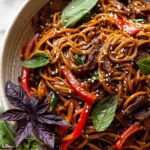
Korean Beef Sesame Noodles in 20 Minutes Recipe
- Prep Time: 15 minutes
- Cook Time: 10 minutes
- Total Time: 25 minutes
- Yield: 4 servings
- Category: Main Course
- Method: Stovetop
- Cuisine: Korean
- Diet: Gluten Free
Description
A quick and flavorful Korean-inspired dish combining tender flank steak, savory sesame noodles, and a spicy-sweet sauce. This meal comes together in just 25 minutes and features a harmonious blend of garlic, ginger, gochujang, and fresh herbs for an authentic taste.
Ingredients
Sauce
- 4 cloves garlic chopped
- 1 tablespoon chopped fresh ginger
- 1/2 cup tamari or soy sauce
- 1/4 cup honey
- 2 tablespoons rice vinegar
- 3 tablespoons Gochujang (Korean chili paste)
- 1 tablespoon toasted sesame oil
Stir Fry
- 8 ounces brown rice noodles
- 2 tablespoons sesame oil
- 3 cups mixed stir fry vegetables
- 3 shallots, sliced
- 1 pound flank steak or chicken breast, sliced thin
- 1/4 cup toasted sesame seeds
- 1/2 cup fresh basil
Instructions
- Make the sauce: Combine all sauce ingredients including garlic, ginger, tamari or soy sauce, honey, rice vinegar, gochujang, and toasted sesame oil in a glass jar. Shake or whisk until well blended.
- Cook noodles: Prepare the brown rice noodles according to package instructions. Drain and rinse under cold water to stop cooking and set aside.
- Sauté vegetables: Heat 1 tablespoon of sesame oil in a large skillet over high heat. Add mixed stir fry vegetables and cook until wilted, about 2-3 minutes. Stir in 2 tablespoons of the prepared sauce and cook until the vegetables are coated with sauce. Remove the vegetables from the pan and set aside.
- Cook shallots and beef: In the same skillet, add remaining 1 tablespoon of sesame oil. Add sliced shallots and cook for 2 minutes until softened. Add thinly sliced flank steak and sear for 2 minutes without stirring. Toss the meat, pour in the remaining sauce, and simmer for 1 minute.
- Combine noodles and vegetables: Stir in the cooked noodles and previously cooked vegetables. Cook together for 2-3 minutes until everything is coated in the sauce and heated through.
- Finish and serve: Remove from heat and stir in fresh basil and toasted sesame seeds. Serve immediately, garnished with extra fresh basil if desired.
Notes
- Substitute chicken breast for flank steak for a lighter protein option.
- Adjust gochujang quantity to control the spice level according to preference.
- Mixed stir fry vegetables can include bell peppers, snap peas, carrots, and broccoli for variety.
- Use tamari for a gluten-free version instead of soy sauce.
- Brown rice noodles can be replaced with rice vermicelli or soba noodles for different textures.
Nutrition
- Serving Size: 1 serving
- Calories: 450 kcal
- Sugar: 12 g
- Sodium: 850 mg
- Fat: 18 g
- Saturated Fat: 3 g
- Unsaturated Fat: 14 g
- Trans Fat: 0 g
- Carbohydrates: 45 g
- Fiber: 4 g
- Protein: 30 g
- Cholesterol: 60 mg