Korean Beef Bowl with Pickled Veggies Recipe
If you’re craving a dish that’s fast, flavorful, and just downright addictive, you’ve gotta try my Korean Beef Bowl with Pickled Veggies Recipe. This recipe hits every note—from savory and sweet to tangy and spicy—with tender ground beef, crunchy pickled veggies, and a bed of fluffy rice that you’ll want to savor bite after bite. Trust me, once you try this Korean-inspired bowl, it’ll be a go-to dinner for busy weeknights or anytime you want something delicious and fuss-free.
Why This Recipe Works
- Balanced flavors: The combination of soy sauce, honey, ginger, and vinegar creates a perfect harmony of salty, sweet, and tangy that keeps every bite exciting.
- Quick to prepare: You can get this meal on the table in about 20 minutes—ideal for those busy nights when time isn’t on your side.
- Versatile and customizable: Whether you prefer rice, quinoa, or cauliflower rice, this dish adapts to what you have on hand or your dietary preferences.
- Fresh crunch with pickled veggies: The easy pickled carrots and cucumbers add a refreshing contrast that brightens the whole bowl.

Ingredients & Why They Work
The ingredients in this Korean Beef Bowl with Pickled Veggies Recipe are simple but pack a punch together. Each one brings something special—like the fresh ginger’s zing, honey’s sweetness, or sesame oil’s nutty aroma—which combine to make a deeply satisfying bowl. When you shop, look for fresh ginger and quality soy sauce to really elevate the flavor.

- Lean ground beef: Using lean beef cuts down on grease and lets the seasonings shine.
- Soy sauce (low sodium): It’s the salty backbone here, so go for a low sodium version to control saltiness.
- Scallions: Both the white and green parts add layers of mild onion flavor and a bit of crunch.
- Garlic: Essential for depth—fresh minced garlic really wakes up the dish.
- Rice vinegar: Adds acidity that balances the richness of the beef and sweet honey.
- Honey: Provides a subtle sweetness that blends with the tang and spice.
- Fresh ginger: For that bright, peppery zing that’s classic in Korean dishes.
- Red pepper flakes: Just enough heat to give the beef a gentle kick.
- Sesame oil: Adds a toasty, nutty aroma that brings everything together.
- Carrots and cucumbers: These veggies get a quick pickle to add crunch and brightness.
- Rice, quinoa, or cauliflower rice: The base that soaks up all the delicious juices—and you pick the option that suits your preference.
- Toasted sesame seeds: A sprinkle at the end adds a visual pop and more nutty flavor.
Make It Your Way
This Korean Beef Bowl with Pickled Veggies Recipe is a great starting point, but one of the things I love most is how easy it is to personalize. Whether you like to dial up the spice or swap out veggies, you can make it your own—and each time it feels a bit different but always just as good.
- Spicy Upgrade: I sometimes add a drizzle of gochujang or extra red pepper flakes when I want more heat—and it totally transforms the flavor.
- Veggie Swaps: If you don’t have cucumbers, thinly sliced radishes or bell peppers work great for that crisp freshness.
- Protein Variations: I’ve even tried ground turkey instead of beef, which makes it lighter but still flavorful with the sauce.
- Grain Options: For a low-carb twist, cauliflower rice is perfect and doesn’t steal the spotlight from the beef.
Step-by-Step: How I Make Korean Beef Bowl with Pickled Veggies Recipe
Step 1: Quick Pickle Your Veggies
First things first, if you want to take those carrots and cucumbers to the next level (and trust me, you do!), toss them in a bowl with rice vinegar, a splash of water, a pinch of sugar, and kosher salt. Let them sit and gently pickle while you work on the beef. This little step adds that tangy crunch that totally upgrades the bowl.
Step 2: Brown the Beef Just Right
Heat up a large skillet over medium-high heat and add your lean ground beef. Break it apart with your spatula and let it brown evenly—about five minutes should do. When it’s halfway cooked, stir in a tablespoon of soy sauce and two-thirds of the scallions. This layering builds flavor as the beef cooks through. Once fully browned, add the minced garlic and cook just 30 seconds so it doesn’t burn but releases that irresistible aroma.
Step 3: Sauce It Up and Simmer
Meanwhile, whisk together rice vinegar, honey, grated ginger, red pepper flakes, and the remaining soy sauce in a small bowl. Pour this magic mixture over the beef and give everything a good stir. Let it simmer for about two minutes so the beef soaks up those punchy flavors. Remove from heat, then drizzle in the sesame oil and toss the remaining scallions on top.
Step 4: Assemble Your Bowl and Serve
Place a generous scoop of cooked rice, quinoa, or cauliflower rice in your bowl, spoon the flavorful beef on top, then pile on those tangy pickled carrots and cucumbers. Finish with a sprinkle of toasted sesame seeds for a little crunch and nutty note. Grab a fork and dig in—you’re in for a simple but sensational meal.
Tips from My Kitchen
- Don’t Overcook the Garlic: Add garlic last and cook it briefly to avoid bitterness.
- Use Lean Beef: I’ve found 93% lean beef gives great flavor without excess grease.
- Let the Pickles Rest: Even 10 minutes of pickling makes a big difference in brightness.
- Adjust Seasoning Last: Taste near the end and add extra soy sauce or spice so it’s perfectly suited to your palate.
How to Serve Korean Beef Bowl with Pickled Veggies Recipe

Garnishes
I love topping this bowl with toasted sesame seeds—they add such a lovely crunch and nutty flavor. Sometimes I slide on a few extra scallions or even fresh cilantro for color and freshness. And if I’m feeling fancy, a drizzle of sriracha or a fried egg on top turns it into an irresistible feast.
Side Dishes
This bowl is actually pretty complete on its own, but if I want to round out the meal, I might serve kimchi on the side or a simple miso soup to keep that Korean vibe going. Quick steamed broccoli or sautéed spinach also pair nicely if you want more greens.
Creative Ways to Present
For a dinner party, I’ve arranged these bowls inside stoneware with individual compartments for beef, veggies, and rice so guests can mix at their own pace. Or, layering everything in a glass jar for a take-to-go lunch looks beautiful and lets you enjoy the flavors fresh later.
Make Ahead and Storage
Storing Leftovers
After cooking, I store leftover beef and pickled veggies separately in airtight containers in my fridge. This keeps the textures fresh and stops the veggies from getting soggy. Leftovers last up to four days and reheat beautifully.
Freezing
If I make extra batches, I freeze the beef mixture and pickled veggies separately in freezer-safe containers. When I’m ready to eat, I thaw them overnight in the fridge so everything reheats evenly without losing texture or flavor.
Reheating
I usually rewarm the beef in a skillet over medium-low heat to keep it juicy and prevent overcooking. The pickled veggies taste best fresh but can have a quick warm-up too if you like. Quick tip: avoid microwaving pickles too long or they’ll lose their crunch.
FAQs
-
Can I use a different type of meat for this Korean Beef Bowl with Pickled Veggies Recipe?
Absolutely! Ground turkey or chicken works well if you want a leaner option. Just adjust the cooking time slightly and season as you would the beef to keep the flavors balanced.
-
How long do the pickled veggies stay fresh?
When stored in the fridge in an airtight container, pickled carrots and cucumbers stay crisp and tasty for up to 4 days. The quick pickling process is refreshing but best enjoyed sooner rather than later.
-
Can I make the Korean Beef Bowl gluten-free?
Yes! Just swap regular soy sauce for tamari or a gluten-free soy sauce alternative, and double-check any other ingredients like rice vinegar to ensure they’re gluten-free certified.
-
What’s the best rice to use with this recipe?
Brown rice is my favorite for its nuttiness and texture, but quinoa or cauliflower rice work wonderfully depending on your preference and dietary needs. Each option soaks up the sauce beautifully.
-
Can I prepare parts of this recipe ahead of time?
Definitely! Pickle the veggies a few hours or even a day ahead, and cook the beef mixture in advance to save time on busy evenings. Just reheat gently before serving for best results.
Final Thoughts
This Korean Beef Bowl with Pickled Veggies Recipe has quickly become one of my favorite weeknight meals because it’s so straightforward yet packed with layers of flavor. I love the way the pickled veggies brighten the rich, savory beef—and the whole thing comes together in under 30 minutes, which is perfect when life gets busy. If you’re looking for a hearty, comforting bowl that feels special without a ton of effort, you really can’t go wrong here. Give it a try and make it your own—you’ll thank me later!
Print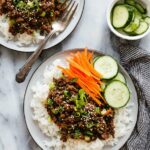
Korean Beef Bowl with Pickled Veggies Recipe
- Prep Time: 10 minutes
- Cook Time: 10 minutes
- Total Time: 20 minutes
- Yield: 4 servings
- Category: Main Course
- Method: Stovetop
- Cuisine: Korean
- Diet: Low Fat
Description
A flavorful Korean Beef Bowl featuring lean ground beef cooked with a savory-sweet sauce, served over your choice of brown rice, quinoa, or cauliflower rice, and topped with vibrant shredded carrots, seedless cucumbers, and toasted sesame seeds.
Ingredients
For the Beef:
- 1 pound lean ground beef (93% lean)
- 3 tablespoons low sodium soy sauce, divided
- 1 1/4 cups minced scallions (both green and white parts), divided
- 1 tablespoon minced garlic (about 3 cloves)
- 2 tablespoons rice vinegar
- 2 tablespoons honey
- 2 tablespoons minced or finely grated fresh ginger
- 1/4 teaspoon red pepper flakes, plus additional to taste
- 1 tablespoon sesame oil, plus additional to taste
For Serving:
- Cooked brown rice, quinoa, or cauliflower rice
- 1 1/2 cups shredded carrots (optional: pickle for enhanced flavor)
- Thinly sliced seedless cucumbers (Persian-style or English/hot house, optional: pickle)
- Toasted sesame seeds
Instructions
- Pickle the Vegetables: If desired, place shredded carrots and sliced cucumbers in a medium bowl. Add 2 tablespoons rice vinegar, 2 tablespoons water, 1/2 teaspoon sugar, and 1/2 teaspoon kosher salt. Toss to coat and let marinate gently while you prepare the beef. Drain before serving.
- Cook the Beef: Heat a large skillet over medium-high heat. Add the ground beef and cook for about 5 minutes, breaking it into small pieces until browned and cooked through. When the beef is halfway cooked, add 1 tablespoon soy sauce and two-thirds of the minced scallions. Once fully browned, stir in the minced garlic and cook for 30 seconds more.
- Prepare the Sauce: In a small bowl, whisk together rice vinegar, honey, grated ginger, red pepper flakes, and the remaining 2 tablespoons soy sauce.
- Combine Sauce with Beef: Pour the sauce over the cooked beef in the skillet. Stir well and cook for an additional 2 minutes to allow flavors to meld. Remove from heat and stir in 1 tablespoon sesame oil. Sprinkle the remaining scallions on top. Taste and add extra soy sauce or red pepper flakes if desired.
- Assemble and Serve: Serve the hot beef mixture over cooked brown rice, quinoa, or cauliflower rice. Top generously with shredded carrots, sliced cucumbers, and toasted sesame seeds for added texture and flavor.
Notes
- Pickling Tip: Pickling the carrots and cucumbers with rice vinegar, water, sugar, and salt adds a delightful tang that elevates the dish.
- Storage: Store leftovers in an airtight container in the refrigerator for up to 4 days.
- Reheating: Rewarm gently in a skillet over medium-low heat or microwave until heated through.
- Freezing: Freeze beef mixture and pickled vegetables separately in airtight containers for up to 3 months. Thaw overnight in the refrigerator before reheating.
- Variations: Use cauliflower rice for a low-carb option or substitute honey with maple syrup for a vegan-friendly alternative if you replace beef.
Nutrition
- Serving Size: 1 bowl
- Calories: 390 kcal
- Sugar: 10 g
- Sodium: 550 mg
- Fat: 18 g
- Saturated Fat: 6 g
- Unsaturated Fat: 10 g
- Trans Fat: 0 g
- Carbohydrates: 30 g
- Fiber: 4 g
- Protein: 28 g
- Cholesterol: 75 mg