Garlic Rosemary Focaccia Bread Recipe
If you’re craving a bread that’s aromatic, fluffy, and packed with flavor, then you’re in for a treat with my Garlic Rosemary Focaccia Bread Recipe. It’s one of those recipes I keep coming back to because it blends the earthiness of fresh rosemary with the sweet, mellow punch of roasted garlic. Whether you’re serving it alongside a salad, using it for sandwiches, or just nibbling on it plain, this focaccia will have you hooked from the first bite. Stick around—I’ll walk you through everything you need to know to bake this fan-freaking-tastic bread right in your own kitchen.
Why This Recipe Works
- Perfect yeast activation: Using warm water between 105°F to 115°F ensures your yeast froths beautifully, which means a fluffy focaccia every time.
- Roasted garlic infusion: Roasting garlic softens its sharpness and gives the bread a sweet, caramelized depth that raw garlic just can’t match.
- Olive oil richness: Dividing the olive oil to coat the dough and the pan creates a tender crumb with a crispy, golden crust.
- Finger dimple technique: Those little indentations aren’t just pretty; they hold olive oil and herbs, packing every bite with flavor.

Ingredients & Why They Work
This Garlic Rosemary Focaccia Bread Recipe combines simple, pantry-friendly ingredients that come together to create layers of taste and texture. Choosing the right type of flour and fresh herbs along with the roasting process for garlic really take this bread to the next level.
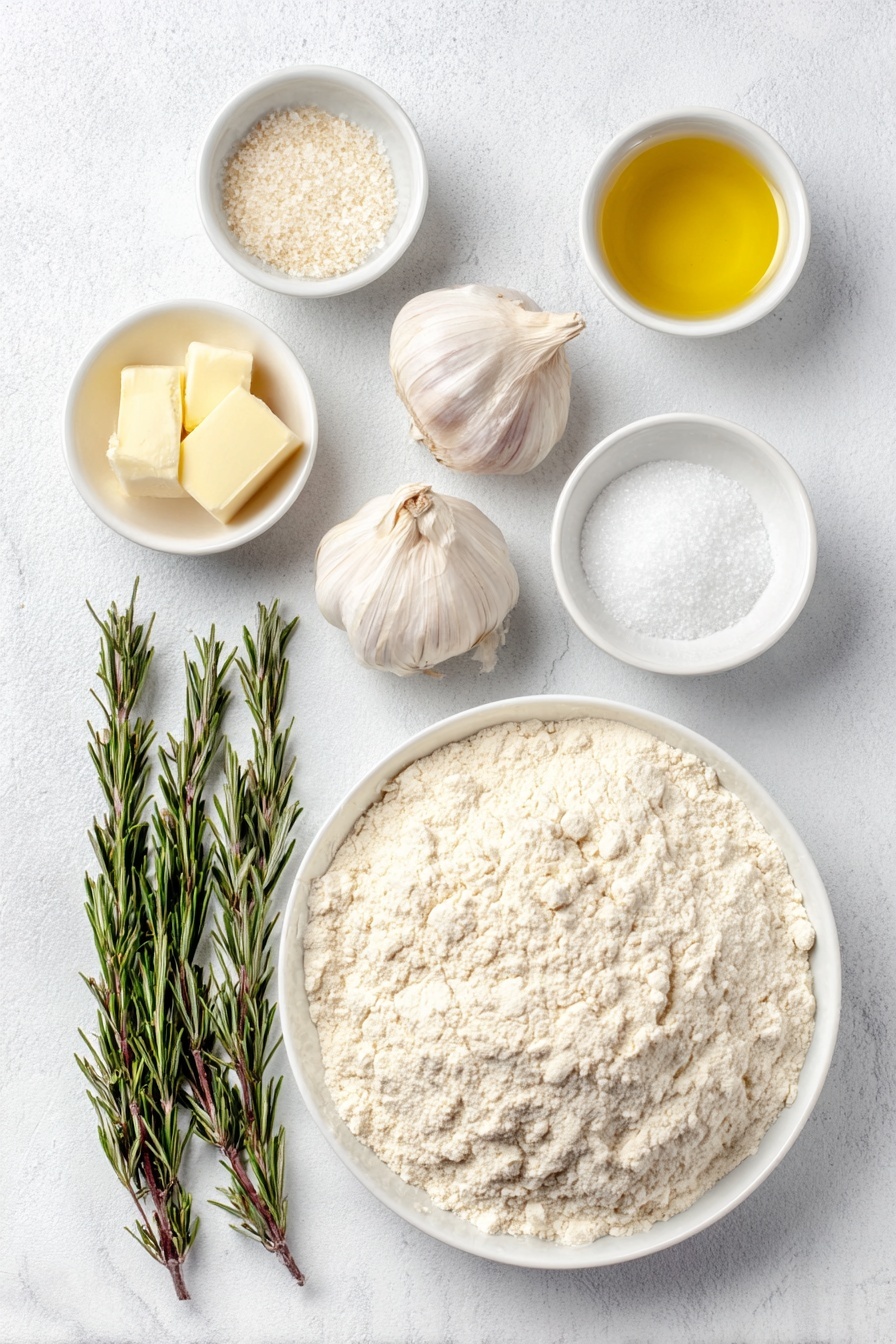
- Warm water: The temperature is crucial here—it wakes up the yeast without killing it, which kickstarts that beautiful rise.
- Granulated sugar: A little sugar feeds the yeast and helps with browning the crust.
- Instant yeast: I like instant yeast because it mixes straight into the flour and starts working fast.
- All-purpose flour: Provides the perfect balance of structure and lightness for focaccia.
- Salt: Enhances flavor and tightens gluten for better dough texture.
- Olive oil: Adds moisture, richness, and a gorgeous golden crust.
- Fresh rosemary: The star herb—its resinous, woodsy aroma makes your kitchen smell unbeatable.
- Whole garlic bulbs: Roasting these before adding results in mellow, soft garlic bites inside the bread.
- Coarse salt: Used as a topping for a crunchy, salty contrast that elevates every bite.
Make It Your Way
One of the things I love most about this Garlic Rosemary Focaccia Bread Recipe is how easy it is to personalize. I usually stick to the basics, but sometimes I like to switch things up with additional toppings or herbs, and it never disappoints. Feel free to get creative and make it your own!
- Variation: I’ve tried adding sun-dried tomatoes and olives for a Mediterranean spin. It adds a punch of flavor that my family adores.
- Dietary modifications: You can swap all-purpose flour with bread flour for a denser texture or even experiment with gluten-free blends, just be mindful the rise times might change.
- Seasonal herbs: If you have fresh thyme, sage, or oregano on hand, toss some in with the rosemary—each herb brings a unique aroma and taste.
Step-by-Step: How I Make Garlic Rosemary Focaccia Bread Recipe
Step 1: Wake Up the Yeast With Care
First things first—you want to make sure your water is perfectly warm, between 105°F to 115°F. I always use a kitchen thermometer because it can be tempting to just go by feel, but too hot or cold water will mess with the yeast’s magic. Add the sugar and yeast to your warm water, then give it a gentle stir. Set it aside for about 5 minutes until you see a nice froth forming on the surface—that’s your yeast telling you it’s ready to work.
Step 2: Roast Your Garlic to Sweet Perfection
While the yeast is waking up, pop those peeled garlic cloves into a small skillet and roast them at 350°F for about 30 minutes. Roasting softens their pungent sharpness and brings out a buttery, caramelized flavor that for me is pure comfort food. Once roasted, chop half the cloves so you can mix that mellow garlic right into the dough and hold onto the other half for topping the bread later.
Step 3: Mix Your Dough
I always measure my flour using the spoon-and-level method to avoid packing too much in, which can make your focaccia dense. Into your mixer bowl with the dough hook, add the flour, salt, a quarter cup of olive oil, and that chopped roasted garlic. Pour in your frothy yeast mixture and start mixing on low, then crank it up to medium once everything starts to come together. Mix for about 5 minutes—you’re looking for a dough that pulls away from the bowl but isn’t sticky. If it feels too wet, sprinkle in a bit more flour, just a tablespoon at a time.
Step 4: First Rise and Get Ready to Shape
Transfer your dough into a large bowl greased generously with olive oil. I brush the top of the dough with a little more oil too—it keeps the surface from drying out. Cover that bowl with plastic wrap and find a warm spot for it to rest. I usually place mine near the stove or inside a turned-off oven with the light on. After about 1.5 hours, you’ll see your dough has doubled in size—not much is as rewarding as this moment.
Step 5: Shape, Second Rise, and Final Prep
Grease a 9×13-inch baking sheet with olive oil and gently transfer your dough onto it. Use your fingers to push the dough evenly across the pan—don’t worry if it feels sticky or a bit resistant; just be gentle so you don’t deflate all the precious air bubbles. Cover again with plastic wrap and set it somewhere warm for another 30 minutes while it puffs up a second time. Before baking, use your fingertips to press dimples all over the surface—these little pockets will soak up olive oil and toppings, making the focaccia irresistibly flavorful.
Step 6: Add Toppings and Bake to Golden Perfection
Brush the dough with more olive oil, then scatter the reserved roasted garlic cloves and sprigs of fresh rosemary across the top. Generously sprinkle with coarse salt for that perfect salty crunch. I bake mine in the middle of the oven at 400°F for about 20 minutes until the crust turns golden brown and crisp. Right when it comes out, I brush it lightly one more time with olive oil—this last step locks in moisture and adds beautiful shine.
Tips from My Kitchen
- Don’t Rush the Rise: I’ve learned that giving the dough plenty of time to double really makes the texture lighter and more airy.
- Consistent Warmth Is Key: I sometimes use a proofing box, but a warm corner in my kitchen works fine as long as it’s draft-free.
- Use Your Fingers, Not a Roller: Poking dimples with your fingers creates those signature pockets of olive oil in the focaccia, and a rolling pin just won’t cut it.
- Avoid Overbaking: I always check a few minutes before the timer to make sure the crust is golden but not too dark—overbaking dries out the bread.
How to Serve Garlic Rosemary Focaccia Bread Recipe
Garnishes
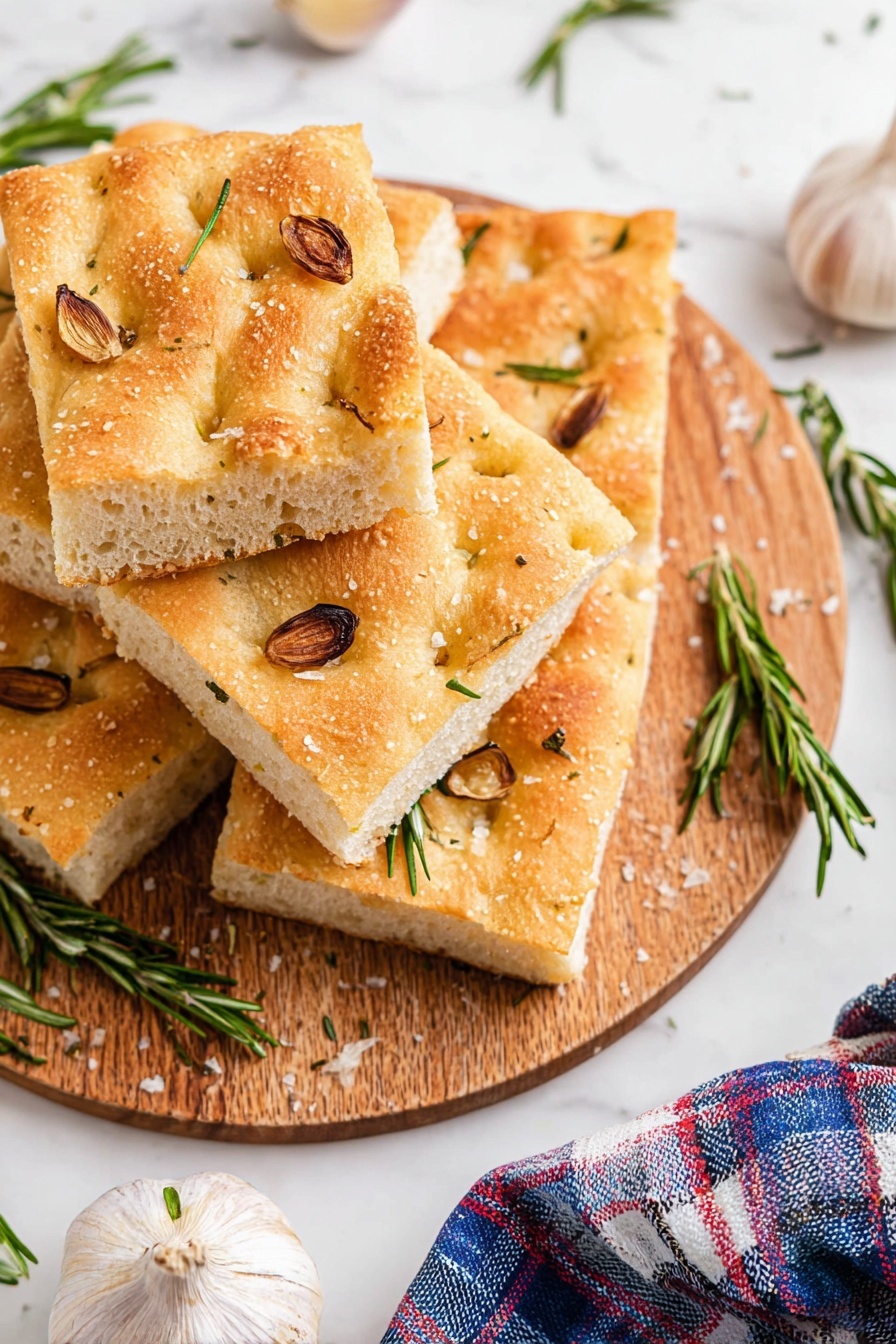
I love topping slices with extra fresh rosemary leaves and a sprinkle of flaky sea salt just before serving—it adds a fresh herbaceous kick and that satisfying crunch. You can also drizzle a little high-quality extra virgin olive oil or a balsamic reduction for a touch of gourmet flair.
Side Dishes
This focaccia pairs beautifully with just about any Italian or Mediterranean meal. My go-to sides are a zesty arugula salad, marinated olives, and a steaming bowl of minestrone soup. It’s also fantastic alongside roasted vegetables or simply used as a sandwich base with fresh mozzarella and tomatoes.
Creative Ways to Present
For special occasions, I’ve shaped the dough into mini focaccia discs instead of one large pan, perfect for personalized servings at a party. Another fun idea is spreading a thin layer of pesto before the second rise for an herby surprise inside the bread. Serving it warm in a beautiful basket lined with a rustic linen always makes guests feel extra welcome.
Make Ahead and Storage
Storing Leftovers
Once cooled completely, I keep leftover focaccia wrapped tightly in plastic wrap or stored in an airtight container at room temperature. It’s best eaten within 2 days, but if it’s still a bit fresh, I gently warm it before serving and it tastes almost like new.
Freezing
I’ve frozen slices of focaccia many times, wrapping each individually with plastic wrap and placing them in a freezer bag. When I want to enjoy it again, I thaw the slices at room temperature for about an hour or pop them directly into a hot oven for a few minutes to refresh.
Reheating
My favorite way to reheat focaccia leftovers is by placing them on a baking sheet in a 350°F oven for 5-7 minutes. This gently crisps the outside while keeping the inside soft and garlicky—trust me, it tastes like you just pulled it from the oven.
FAQs
-
Can I make this Garlic Rosemary Focaccia Bread Recipe without a stand mixer?
Absolutely! You can mix and knead the dough by hand. It’ll just take a bit more elbow grease—about 10 minutes of kneading until the dough is smooth and elastic. Using your hands also helps you get a feel for the dough texture, which is a great skill to develop.
-
What type of rosemary should I use? Fresh or dried?
Fresh rosemary is definitely best for this recipe because it releases its oils and fragrance beautifully during baking. If you only have dried rosemary, use it sparingly as it can be more potent and might not distribute as evenly in the dough.
-
Why do I need to roast the garlic first?
Roasting garlic transforms its sharp, raw bite into a mellow, sweet flavor that infuses the bread gently. It also softens the cloves so they become little bursts of yummy garlic inside your focaccia rather than overwhelming pungent chunks.
-
Can I add other toppings to this recipe?
Definitely! Ingredients like cherry tomatoes, caramelized onions, olives, or even shredded cheese make excellent add-ins. Just sprinkle them on top before baking along with the rosemary and garlic.
-
How do I know when the focaccia is done baking?
The top should be golden brown with a slightly crisp crust, and when you tap the bottom it sounds hollow. You can also insert a toothpick in the center; it should come out clean without sticky dough.
Final Thoughts
This Garlic Rosemary Focaccia Bread Recipe holds a special spot in my heart because it’s straightforward, comforting, and always impresses guests with its beautiful aroma and flavor. I hope you give it a try soon—it’s the kind of recipe I recommend to friends when they want that wow-factor homemade bread without the fuss. You’ll enjoy the process almost as much as the delicious results, and your kitchen will smell incredible while you’re at it!
Print
Garlic Rosemary Focaccia Bread Recipe
- Prep Time: 10 minutes
- Cook Time: 20 minutes
- Total Time: 2 hours 30 minutes
- Yield: 8 servings
- Category: Bread
- Method: Baking
- Cuisine: Italian
- Diet: Vegetarian
Description
This Garlic Rosemary Focaccia recipe features a fragrant, soft Italian bread infused with roasted garlic and fresh rosemary. Perfectly crispy on the outside and tender on the inside, this homemade focaccia is ideal as a side dish, appetizer, or snack.
Ingredients
Dough Ingredients
- 1-1/3 cup warm water (105°F to 115°F)
- 2 teaspoons granulated sugar
- 1 ounce instant yeast (or 2-¼ teaspoons)
- 3-3/4 cups all-purpose flour (480g)
- 2 teaspoons salt
- 1/4 cup olive oil
- 1/2 cup olive oil (divided for dough and topping)
- Chopped roasted garlic cloves (from 1 bulb roasted)
Topping Ingredients
- 3 sprigs fresh rosemary
- 1 whole garlic bulb (separated and peeled, half roasted for dough, half reserved for topping)
- Coarse salt for sprinkling
Instructions
- Activate yeast: Using a thermometer, ensure the water is between 105°F to 115°F. Add sugar and yeast to the warm water. Let sit for 5 minutes until frothy.
- Roast garlic: Preheat oven to 350°F. Place peeled garlic cloves in a small skillet and roast for 30 minutes. Chop half of the roasted cloves to add to the dough and reserve the other half for topping later.
- Mix dry ingredients: Measure flour using spoon and leveling technique. In a stand mixer bowl fitted with a dough hook, combine flour, salt, 1/4 cup olive oil, and chopped roasted garlic.
- Combine yeast and flour mixtures: Pour the yeast mixture into the flour mix. Start mixing slowly, then increase to medium speed. Mix for about 5 minutes until dough pulls away from the bowl and is slightly tacky but not sticky. Add more flour if needed.
- First rise: Transfer dough to a large bowl greased with olive oil. Brush the top with more olive oil and cover with plastic wrap. Let rise in a warm place for 1-½ hours until doubled in size.
- Preheat oven: Increase oven temperature to 400°F.
- Shape dough: Grease a 9×13 inch baking sheet with olive oil. Place the dough onto the sheet and use fingers to spread the dough evenly across.
- Second rise: Cover the dough again with plastic wrap and let rise in a warm place for 30 minutes.
- Dimple and top dough: Poke holes evenly across the surface of the dough with your fingers. Brush dough with olive oil, sprinkle with remaining roasted garlic cloves, torn rosemary leaves, and coarse salt.
- Bake focaccia: Bake on a middle rack in the oven for about 20 minutes until golden brown.
- Finish: Remove from oven and lightly brush the top again with olive oil before serving.
Notes
- Use a kitchen thermometer to ensure water temperature is optimal for yeast activation.
- Roasting garlic softens its flavor and adds a subtle, sweet depth to the dough.
- You can substitute fresh rosemary with dried rosemary if fresh is unavailable, but use less as dried is more potent.
- Olive oil not only adds flavor but also helps keep the focaccia moist and tender.
- For a crispier crust, bake an extra 2-3 minutes and brush again with olive oil after baking.
- Use a stand mixer with a dough hook for easier kneading, but knead by hand if preferred.
Nutrition
- Serving Size: 1 slice (approx. 1/8 of loaf)
- Calories: 220 kcal
- Sugar: 1.5 g
- Sodium: 350 mg
- Fat: 9 g
- Saturated Fat: 1.3 g
- Unsaturated Fat: 7 g
- Trans Fat: 0 g
- Carbohydrates: 29 g
- Fiber: 1.5 g
- Protein: 5 g
- Cholesterol: 0 mg