Beef Wellington Recipe
If you’ve ever dreamed of making a show-stopping centerpiece that truly impresses, then this Beef Wellington Recipe is about to become your new favorite. It combines juicy, perfectly cooked beef with layers of flavorful duxelles, prosciutto, and buttery puff pastry, resulting in a dish that looks as incredible as it tastes. I promise, once you try this, you’ll understand why it’s such a classic, and you’ll be confidently serving it up at your next dinner party or special occasion.
Why This Recipe Works
- Perfectly Balanced Flavors: Earthy mushroom duxelles and salty prosciutto complement the tender beef beautifully.
- Juicy Tenderloin Inside: Searing the beef locks in juices, keeping the center medium-rare and melt-in-your-mouth.
- Flaky Puff Pastry Crust: The golden, buttery crust adds a satisfying crunch and creates an elegant presentation.
- Foolproof Assembly Method: Wrapping with plastic wrap and chilling keeps everything tight and neat before baking.

Ingredients & Why They Work
This recipe is all about quality ingredients working in harmony. The tenderloin is the star—so you want a good cut with minimal fat, and don’t skimp on seasoning. The mushrooms for the duxelles are chopped finely to provide moisture and umami without overpowering. Prosciutto adds a layer of saltiness and helps keep the moisture in the meat. Puff pastry seals everything with a flaky, buttery crust that is pure comfort. Here’s a quick rundown of the key players:
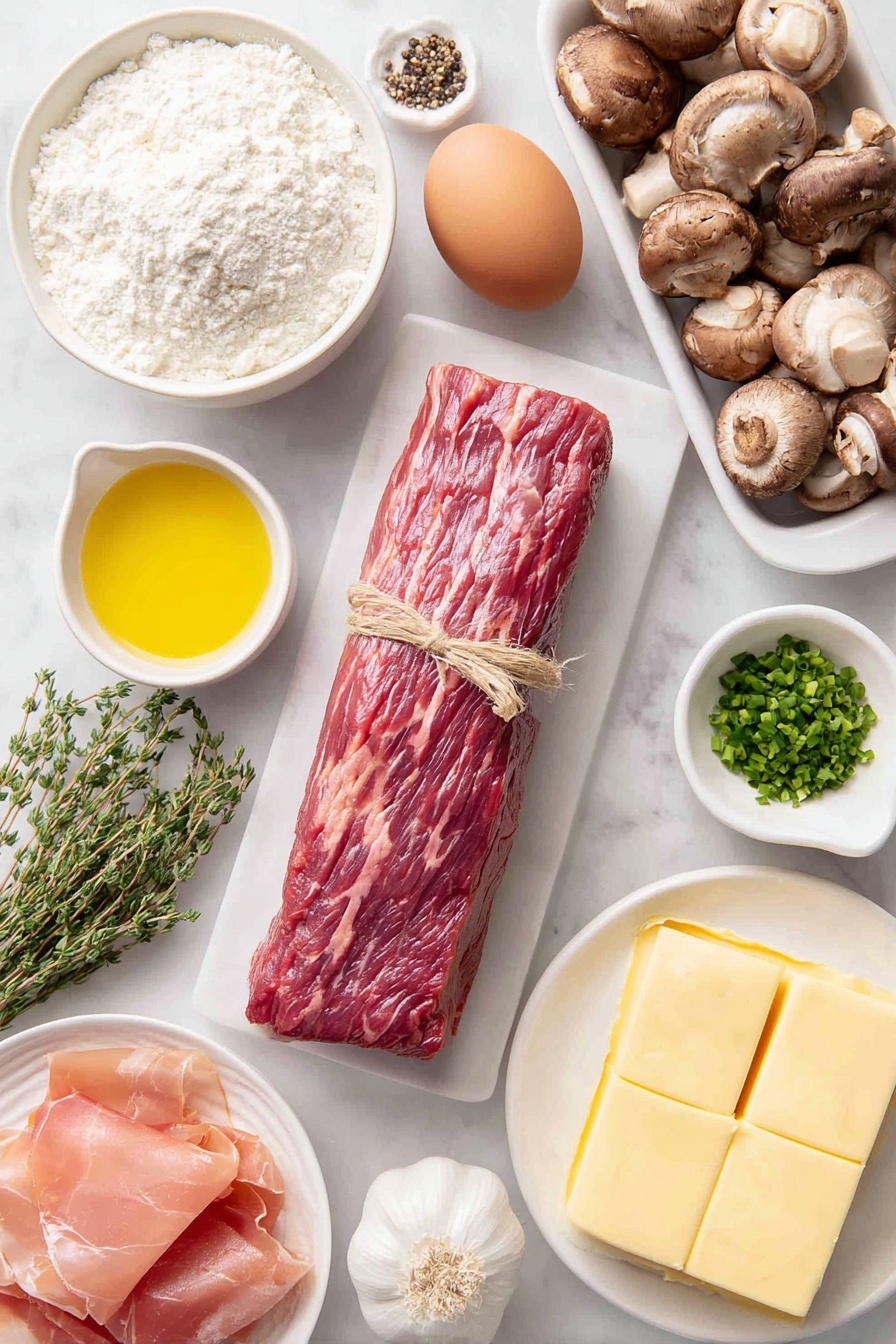
- Center-cut beef tenderloin: This is the prime cut for tenderness and flavor; trimming silverskin is crucial for an even cook.
- Kosher salt & freshly ground black pepper: Essential for seasoning and bringing out the depth in both meat and mushrooms.
- Olive oil: For a perfect sear that locks in juicy flavor.
- Dijon mustard: Adds tang and a subtle bite, helping balance richness.
- Mushrooms: A mix of varieties adds complexity to the duxelles; washing and chopping them well is key.
- Salted butter: Gives richness and helps sauté the mushrooms beautifully.
- Shallots and garlic: Provide aromatic depth and a gentle sweetness.
- Fresh thyme leaves: The herbaceous notes tie everything together.
- Prosciutto slices: Create a savory, salty barrier that keeps the beef juicy.
- Flour: For rolling out puff pastry smoothly without sticking.
- Puff pastry: Choose good-quality, thawed pastry for the best flaky crust.
- Egg wash: Helps seal the pastry and adds a beautiful golden color.
- Flaky sea salt: To finish and add texture contrast.
- Fresh chives: Brighten the final dish with a fresh, mild onion note.
Make It Your Way
This Beef Wellington Recipe is wonderfully versatile. Over the years, I’ve played with different mushroom combos, added a splash of Madeira or brandy to my duxelles, and tried both homemade and store-bought puff pastry (honestly, sometimes life calls for the easier option!). Feel free to customize it to your taste and your schedule—you can’t go wrong.
- Variation: I once added a thin layer of pate between the prosciutto and duxelles for an extra indulgent touch. Totally worth it if you’re feeling fancy!
- Dietary Modification: For a lighter version, swap butter with olive oil and opt for a gluten-free pastry option available at specialty stores.
- Seasonal Twist: In autumn, try stirring finely chopped chestnuts into the mushroom duxelles for a nutty texture.
Step-by-Step: How I Make Beef Wellington Recipe
Step 1: Prepping and Searing the Tenderloin
First things first: trim away any silverskin or excess fat from your tenderloin—this helps the seasoning stick and ensures tenderness. I usually ask my butcher to tie the tenderloin with butcher’s twine at 1-inch intervals for even cooking and easier handling. Once tied, season liberally with kosher salt and freshly ground pepper—about a teaspoon of salt per pound is my go-to. When your pan is screaming hot (seriously, let it smoke), add olive oil and sear the beef on every side including the ends. Don’t fuss with it; let it sit so it develops that gorgeous brown crust, about 2 minutes per side. This step locks in the juices and flavors, setting the stage for success.
Step 2: Making the Mushroom Duxelles
While the beef cools, it’s duxelles time. Throw half your mushrooms, shallots, thyme, and garlic in a food processor and pulse until finely chopped, then repeat with the rest. Heat butter and olive oil in the same skillet you seared the tenderloin—it’s full of flavor already, so why waste? Add your mushroom mix, season with salt and pepper, and cook over medium-high, stirring occasionally. You want to cook off all the mushroom moisture first (about 8-10 minutes), then continue browning for another few minutes until it’s beautifully golden. Let it cool completely—hot duxelles can make the puff pastry soggy.
Step 3: Wrapping with Prosciutto and Duxelles
Lay out a large piece of plastic wrap (I like double layering to keep things tight) and arrange your prosciutto slices slightly overlapping so they form a neat square. Spread the cooled duxelles evenly over the prosciutto, then place your mustard-brushed tenderloin at one edge. Using the plastic wrap, roll it all into a tight log, tucking in the ends of the prosciutto as you go. Twist the plastic wrap ends and chill the whole package in your fridge for 30 minutes. This step makes sure everything holds its shape and is easier to wrap in puff pastry.
Step 4: Enveloping in Puff Pastry and Baking
Lightly flour a clean surface and roll out your thawed puff pastry into a rectangle big enough to wrap your chilled tenderloin log. Remove the plastic wrap and place the beef in the center. Roll up carefully, sealing the edges with beaten egg. If your pastry has excess edges, feel free to trim them so it looks tidy and bakes evenly. Transfer the wrapped Wellington to a parchment-lined baking sheet. Brush the top generously with egg wash and cut small diagonal slashes to allow steam to escape. Sprinkle flaky sea salt on top for crunch and flavor. Bake at 425°F (218°C) for about 40-45 minutes, or until the pastry is golden and a meat thermometer reads 120-125°F for perfect medium-rare. Rest 10 minutes before slicing to keep those juices locked in.
Tips from My Kitchen
- Don’t Skip Tying the Tenderloin: It keeps the beef in a perfect shape that cooks evenly every time.
- Chill Before Puff Pastry Wrapping: Helps the layers stay tight and prevents puff pastry from tearing.
- Use a Meat Thermometer: It’s your best friend to hit that perfect medium-rare without guesswork.
- Avoid Soggy Bottoms: Make sure your duxelles are fully cooled and dry before assembly to keep the crust crisp.
How to Serve Beef Wellington Recipe
Garnishes
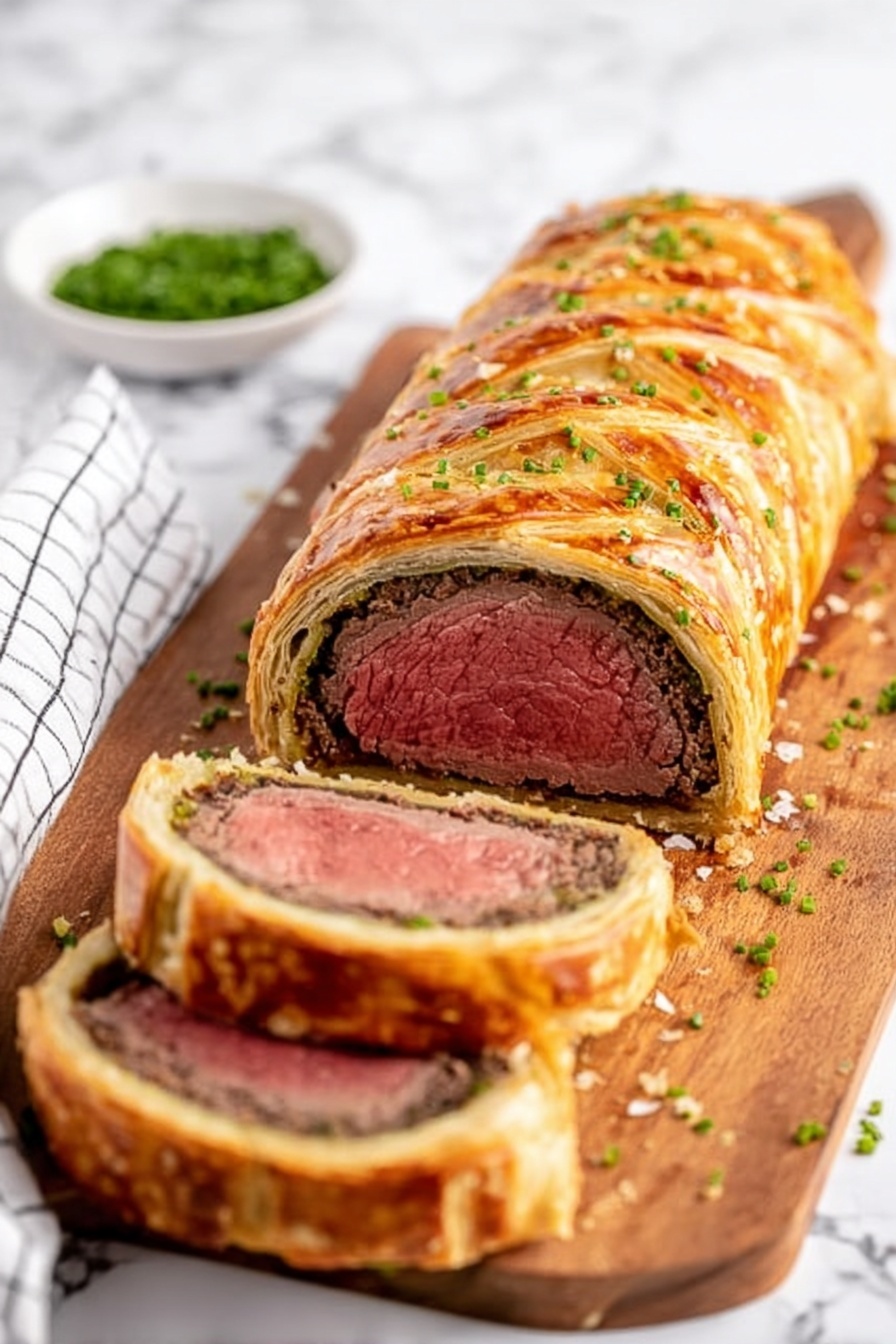
I like to finish this Beef Wellington with a handful of finely minced fresh chives sprinkled over each slice. Not only does it add a pop of color, but the fresh, mild onion bite beautifully balances the richness of the beef and pastry. A little extra flaky sea salt right before serving also adds a wonderful texture and brings out all the layered flavors.
Side Dishes
For sides, I’m a big fan of classic, elegant choices that won’t compete with your showstopper Wellington. Think buttery mashed potatoes or a creamy parsnip puree, roasted root vegetables with a drizzle of good olive oil and herbs, or even simple green beans almondine. A rich red wine sauce or a mushroom demi-glace on the side adds to that celebratory feeling.
Creative Ways to Present
Once, for a holiday party, I sliced the Wellington thin and served it on a wooden board alongside roasted baby carrots tied with microgreens, little browned potatoes, and piped dollops of horseradish cream. It made for a rustic yet elegant buffet that guests loved. You can also wrap individual portions in puff pastry using smaller cuts of beef tenderloin for a party-friendly presentation that’s just as delicious.
Make Ahead and Storage
Storing Leftovers
Leftover Beef Wellington? It’s a treat that keeps well. I wrap any slices tightly in foil or store in an airtight container in the fridge, and they stay juicy for up to 2 days. The crust softens a bit, but reheating properly helps bring it back to life.
Freezing
I’ve frozen the assembled, unbaked Wellington wrapped tightly in plastic wrap and then foil for up to a month. When I’m ready to bake, I just thaw it overnight in the fridge and bake as usual. It loses none of its charm and makes a fantastic make-ahead gift or dinner.
Reheating
To reheat, I preheat the oven to 350°F (175°C), place leftover slices on a baking sheet, and cover loosely with foil to prevent drying out. About 12-15 minutes warms them through while gently reviving the flaky crust. Avoid the microwave if you want to keep that signature pastry texture crisp.
FAQs
-
Can I use a different cut of beef for this Beef Wellington Recipe?
While beef tenderloin is the classic choice due to its tenderness and size, other cuts like striploin can be used but won’t be quite as tender. If you’re feeling adventurous and okay with a bit of chew, you can experiment, but be sure to adjust cooking time accordingly.
-
How do I know when my Beef Wellington is perfectly cooked?
The trickiest part is cooking the beef to your preferred doneness without overbaking the pastry. Using a digital meat thermometer, pull it from the oven when the internal temperature hits 120-125°F for medium-rare. After resting, it will reach about 130°F. This guarantees juicy, tender beef inside golden, flaky pastry.
-
Can I make the duxelles ahead of time?
Absolutely! You can prepare the mushroom duxelles a day ahead and keep it refrigerated. Just be sure to bring it to room temperature before assembling to avoid soggy pastry.
-
What should I serve with Beef Wellington?
Classic sides include mashed potatoes, roasted vegetables, green beans, and rich sauces like red wine jus. Choose sides that complement the richness without overpowering the dish.
Final Thoughts
This Beef Wellington Recipe holds a special place in my heart because it turns any ordinary meal into a celebration. Cooking it is like a little labor of love that pays off with every perfect slice you serve. Trust me, once you make it, you’ll get the same glow I do when friends rave about how amazing it tastes—and you’ll find yourself making it over and over, too. So go ahead, roll up your sleeves, and dive in. You’ve got this, and I can’t wait for you to see just how incredible homemade Beef Wellington can be!
Print
Beef Wellington Recipe
- Prep Time: 20 minutes
- Cook Time: 1 hour 10 minutes
- Total Time: 2 hours
- Yield: 8 servings
- Category: Main Course
- Method: Baking
- Cuisine: British
Description
Classic Beef Wellington recipe featuring a perfectly seared beef tenderloin wrapped in a savory mushroom duxelles and prosciutto, all encased in golden puff pastry. This elegant dish is ideal for special occasions and impressive dinners.
Ingredients
Beef Tenderloin
- 2-3 pounds center-cut beef tenderloin trimmed of silverskin and fat, then tied with butcher’s twine at 1-inch intervals
- Kosher salt and freshly ground black pepper
- 2 tablespoons olive oil
- 2 tablespoons dijon mustard
Duxelles
- 1 1/2 pounds mushrooms (button, cremini, shiitake, portabello, or a mix cleaned and roughly chopped)
- 2 tablespoons salted butter
- 2 tablespoons olive oil
- 2 medium shallots roughly chopped
- 2 teaspoons fresh thyme leaves (about 6 sprigs)
- 4 cloves garlic
- Kosher salt and freshly ground black pepper
Assembly
- 12 thin slices prosciutto (about ¼ pound)
- Flour for rolling out puff pastry
- 14 ounces frozen or homemade puff pastry thawed
- 1 large egg beaten
- 1/2 teaspoon flaky or coarse sea salt such as Maldon or fleur de sel
- 1 bunch finely minced chives
Instructions
- Prepare the tenderloin. Trim the silverskin and fat from the beef tenderloin if needed, then tie it with butcher’s twine at 1-inch intervals. Season generously with kosher salt (about 1 teaspoon per pound) and freshly ground black pepper all over. Heat a large skillet over high heat until smoking hot, then add olive oil. Sear the tenderloin on all sides, about 2 minutes per side, to develop a nice brown crust without moving the meat prematurely. Remove from the pan, cut off the twine, and brush all sides with dijon mustard while still warm. Set aside.
- Make the Duxelles. Place half of the mushrooms, shallots, thyme leaves, and garlic in a food processor, pulsing 10-15 times until finely chopped. Repeat with the remaining mushrooms and herbs. In the same skillet, melt butter and olive oil over medium-high heat. Add the mushroom mixture, season with salt and pepper, and cook, stirring occasionally, until most liquid has evaporated, about 8-10 minutes. Continue cooking until mushrooms brown, about 4-5 more minutes. Remove from heat and let cool.
- Assemble the Wellington. Lay out prosciutto slices on a large double layer of plastic wrap, overlapping slightly to form a square large enough to wrap the tenderloin. Spread the cooled duxelles evenly over the prosciutto. Place the tenderloin on one end and use the plastic wrap to roll it tightly into a log, tucking in prosciutto edges. Twist the ends of the plastic wrap and refrigerate for 30 minutes to set the shape.
- Prepare the puff pastry. Preheat the oven to 425°F (218°C). Lightly dust a clean surface with flour and roll out the thawed puff pastry into a rectangle large enough to enclose the rolled tenderloin. Remove the plastic wrap from the tenderloin and place it on the pastry. Roll the pastry around the tenderloin, tucking ends under and sealing the seam with beaten egg. Trim excess pastry if needed.
- Bake the Beef Wellington. Transfer the wrapped beef to a baking sheet lined with parchment paper. Brush the top with remaining beaten egg. Cut diagonal slashes every inch or so along the pastry surface to allow steam to escape. Sprinkle with flaky or coarse sea salt. Bake for 40-45 minutes until the pastry is golden brown and the internal temperature of the tenderloin reaches 120-125°F (49-51°C) for medium-rare doneness.
- Rest and serve. Remove from the oven and let rest for 10 minutes before slicing into thick pieces. Garnish with fresh minced chives and an additional sprinkling of flaky or coarse salt. Serve immediately.
Notes
- For an accurate internal temperature, use a digital meat thermometer to avoid overcooking.
- Letting the assembled Wellington chill in the fridge helps the shape hold together and makes rolling easier.
- Choose a mixture of mushrooms for richer flavor and texture in the duxelles.
- If you don’t have prosciutto, thinly sliced ham can be a substitute, though prosciutto is preferred for authenticity.
- Allow the Wellington to rest before slicing to ensure juices redistribute and the pastry stays crisp.
- Make sure to seal the pastry well to prevent juices from leaking during baking.
Nutrition
- Serving Size: 1 slice
- Calories: 700 kcal
- Sugar: 3 g
- Sodium: 750 mg
- Fat: 45 g
- Saturated Fat: 18 g
- Unsaturated Fat: 25 g
- Trans Fat: 0.5 g
- Carbohydrates: 45 g
- Fiber: 3 g
- Protein: 40 g
- Cholesterol: 150 mg